Fencing Pants Fit Guide: 7 Essential Checks for Safety, Mobility & Long-Term Comfort
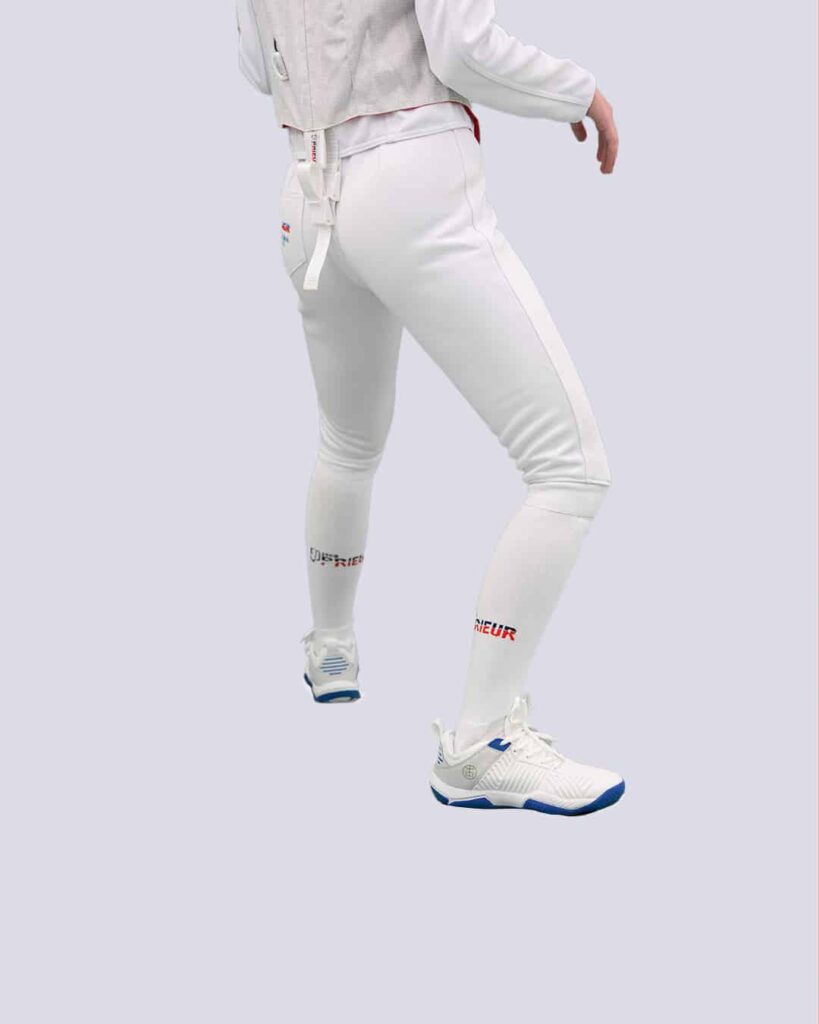
Proper fencing pants fit is essential for safety, comfort, and uniform compliance. Fencing pants are designed to sit securely on the body, finish just below the knee, and integrate cleanly with the rest of the uniform to provide continuous lower-body coverage. When fit is correct, the garment remains stable through movement, supports reliable inspection outcomes, and contributes to long-term durability.
Understanding how fencing pants and knickers should fit helps prevent coverage gaps, discomfort, and premature wear. Because fencing pants are worn as part of a complete protective system—including the jacket, socks, and plastron—fit must be evaluated not only in isolation, but in how the garment performs over time and in combination with the rest of the uniform.
This guide explains what correct fencing pants fit looks like, how to evaluate key fit areas, and why proper fit directly affects safety, inspection relevance, comfort, and equipment longevity.
Why Fencing Pants Fit Matters
Fencing pants are protective equipment, not general sportswear. Their role is to protect the hips, thighs, and knees while maintaining uninterrupted coverage with adjacent uniform components. Proper fencing pants fit ensures the garment remains where it is intended to be, even as the body moves repeatedly through a wide range of positions. Our fencing pants are designed to integrate cleanly with the rest of the uniform and support consistent coverage, inspection readiness, and long-term durability.
When fencing pants fit correctly, they:
Maintain consistent coverage at all times
Reduce the likelihood of exposed skin between uniform pieces
Prevent unnecessary stress on seams and fabric panels
Wear evenly, extending the usable life of the garment
Poor fit often leads to subtle problems at first—slight shifting, mild discomfort, or small wear points—that worsen over time. Addressing fit early helps preserve both safety and long-term value.
The 7 Essential Checks for Proper Fencing Pants Fit
1. Overall Position and Support
Proper fencing pants fit begins with how the garment sits on the body as a whole. The pants should remain at a consistent height, neither creeping upward nor settling downward during wear.
Correct overall positioning means:
The waist remains aligned with the torso
The leg panels hang evenly on both sides
Knee placement stays consistent throughout use
If pants require frequent repositioning or feel different after short periods of wear, sizing or proportions may not be correct.
2. Waist Fit and Closure Comfort
The waist area plays an important role in stabilizing fencing pants and keeping them aligned with the upper body. A correct waist fit should feel secure without feeling restrictive.
Proper waist fit should:
Close smoothly and lie flat
Avoid pinching or pressure points
Remain secure throughout extended wear
A waist that feels overly tight can increase seam stress and reduce comfort, while a loose waist allows unwanted movement that affects overall fit and coverage.
3. Below-the-Knee Length and Sock Overlap
Regulation fencing pants are designed to finish just below the knee. This length is intentional and plays a critical role in maintaining continuous coverage when paired with fencing socks.
Correct length ensures:
The hem sits just below the knee joint
Sock overlap remains complete at all times
Coverage is maintained even when the knee bends
If the hem sits too high, pants are more likely to ride up and create gaps. If the hem extends too far down the calf, the garment may bunch or interfere with sock positioning. Proper fencing pants fit allows the pants and socks to function together as a unified protective layer.
4. Knee Placement and Natural Articulation
Because fencing pants end below the knee, correct knee articulation is essential for comfort and durability. The garment should bend naturally at the knee without pulling or tightening.
Correct knee fit means:
Smooth bending without resistance
No tension across the knee joint
Shaping or reinforcement remains aligned with movement
Poor knee articulation often leads to discomfort and increased wear in high-stress areas. Over time, this can result in fabric fatigue around the knee and inner thigh seams.
5. Hip and Thigh Mobility
Fencing pants must allow natural movement through the hips and thighs while remaining stable on the body. Proper fencing pants fit in this area balances structure with freedom of movement.
A well-fitted garment:
Allows unrestricted leg motion
Avoids excessive tightness across the thighs
Prevents excess fabric from folding or twisting
Tightness in the thigh area can pull the pants upward toward the knee, while excessive looseness can cause the leg panels to rotate and wear unevenly. Balanced mobility supports comfort and long-term performance.
6. Fabric Tension and Comfort Balance
Correct fencing pants fit should feel supportive without feeling restrictive. Fabric should sit smoothly across the hips, thighs, and seat, following the body’s shape without strain.
Signs of proper fabric tension include:
No pulling at seams during movement
No pinching at the waist
No excessive bunching behind the knee
Excess compression increases seam stress and can reduce comfort over time. Excess fabric increases friction, which accelerates wear in high-contact areas.
7. Stability Over Time
A final and often overlooked aspect of proper fencing pants fit is stability during extended wear. Pants that fit correctly at first but shift noticeably over time may not be sized or proportioned correctly.
Stable fit means:
The waist remains in position
The hem stays below the knee
Sock overlap remains consistent
The garment does not twist or migrate
If frequent adjustment is required, the fit should be reassessed.
Differences Between Adult and Youth Fencing Pants Fit
Youth fencing pants fit requires additional consideration due to growth and changing body proportions. The goal is to maintain correct coverage without introducing excess fabric that affects stability.
Youth fit priorities include:
Secure positioning without discomfort
Below-the-knee length that remains effective during movement
Enough room for comfort without excess bulk
Adult fencing pants fit prioritizes proportional consistency and long-term durability. Because adults experience less change in body proportions, correct sizing plays a greater role in ensuring consistent performance over time. Our youth fencing uniform content provides additional guidance on sizing considerations specific to younger fencers.
Common Fencing Pants Fit Problems
Pants Riding Up
Often caused by:
Incorrect length
Tightness through the thigh or knee
Poor proportional sizing
This can reduce sock overlap and create visible coverage gaps.
Pants Sagging
Commonly caused by:
Loose overall fit
Incorrect waist sizing
Poor garment support
Sagging affects comfort and places additional stress on seams and closures.
Restricted Movement
Typically caused by:
Excessive compression
Poor knee articulation
Restricted movement increases seam stress and reduces comfort.
Excess Fabric or Twisting
Often caused by:
Oversized thigh or seat
Mismatch between body proportions and garment cut
This leads to increased friction and uneven wear patterns.
How Proper Fit Supports Safety and Protection
Protective materials function as intended only when positioned correctly. Proper fencing pants fit ensures coverage remains consistent at the hips, thighs, and knees and that lower-leg protection is maintained through proper sock overlap. Gaps, shifting, or misalignment undermine the protective purpose of the uniform system.
Fit and Equipment Inspection Relevance
Uniform inspection focuses on coverage, garment condition, and structural integrity. Incorrect fencing pants fit frequently results in:
Visible gaps between pants and socks
Excessive wear at high-stress areas
Misalignment that raises inspection concerns
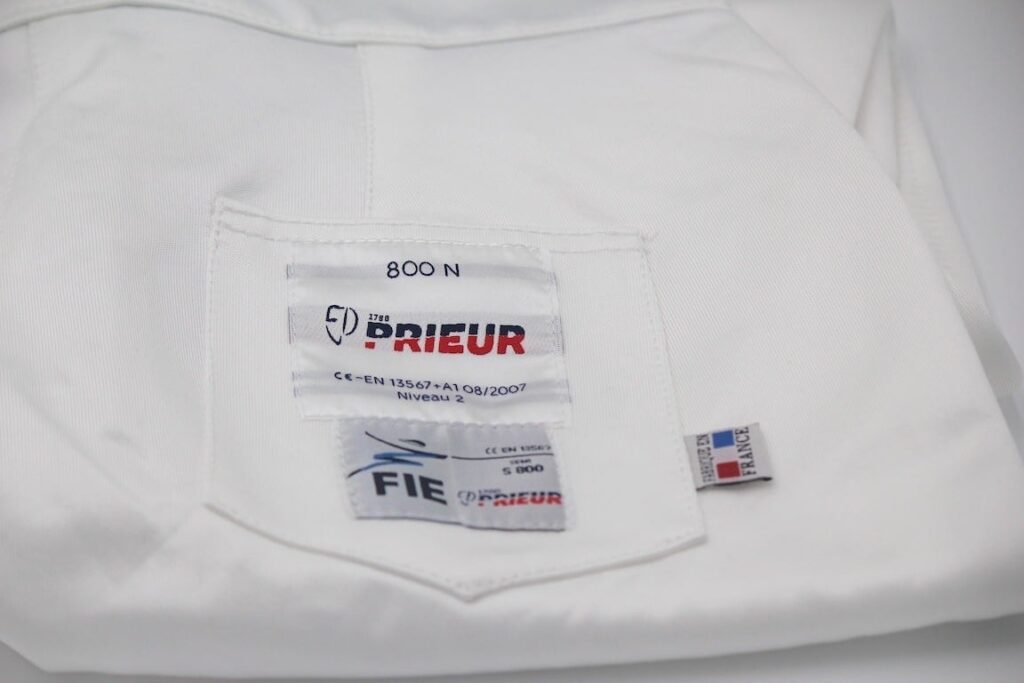
Standards recognized by organizations such as USA Fencing and the International Fencing Federation assume that garments are worn with correct fit to meet compliance expectations.
Fit and Long-Term Durability
Correct fencing pants fit distributes stress evenly across fabric panels and seams. Over time, this leads to:
Reduced seam failure
Slower material fatigue
More predictable and even wear
Improper fit concentrates stress in limited areas, significantly reducing the usable lifespan of the garment.
How Should Fencing Pants Fit?
Proper fencing pants fit means the pants:
Sit securely and consistently on the body
Finish just below the knee
Maintain full overlap with fencing socks
Flex naturally at the knee
Allow balanced mobility through the hips and thighs
Remain stable without sagging, twisting, or riding up
When fencing pants fit correctly, they provide reliable protection, long-term comfort, and inspection-ready performance—supporting the fencing uniform system without compromise.