Fencing Glove Fit Guide: 7 Smart Checks for Safer, Longer-Lasting Gloves
Proper fencing glove fit is one of the most important yet underestimated factors in fencing equipment performance. Gloves are worn every time a weapon is handled, and they experience constant pressure, friction, and moisture exposure. Because of this, glove fit directly affects safety, comfort, durability, and long-term value—many of the same durability principles outlined in How to Check Your Fencing Uniform: 6 Important Items to Check for Safety and Durability.
A fencing glove that fits correctly works with the hand, not against it. It distributes stress evenly across reinforced zones, maintains consistent coverage at the wrist, and allows materials to flex naturally without distortion. A glove that fits poorly concentrates wear in a few critical areas, leading to premature seam failure, discomfort, and unnecessary replacement—issues also seen across improperly sized protective equipment such as jackets and uniforms.
This Fencing Glove Fit Guide explains 7 smart checks that allow fencers to evaluate fencing glove fit objectively. These checks are equipment-focused, repeatable, and applicable across foil, épée, and sabre gloves, including Prieur fencing gloves designed for club and competition use. No technique. No coaching. Only the factors that determine whether a glove lasts months or seasons.
Why Fencing Glove Fit Matters More Than Most Fencers Realize
Among all fencing equipment, gloves are exposed to some of the most consistent mechanical stress. Every grip applies localized pressure to the palm and thumb. Every extension and recovery flexes the fingers and knuckles. Every session introduces moisture that affects materials over time—an issue discussed more broadly in Fencing Gear Storage and Longevity Guides.
When fencing glove fit is correct:
Reinforced palm and thumb panels absorb load evenly
Seams remain relaxed rather than overstretched
Materials flex and recover without fatigue
Wrist coverage stays stable under the jacket sleeve
When fencing glove fit is incorrect, stress concentrates instead of distributing. Fingertips pull against seams, palms crease unnaturally, thumbs twist inside their channels, and cuffs shift under jackets. These issues compound gradually, often going unnoticed until the glove fails far earlier than expected.
Proper fencing glove fit is not about preference or feel alone. It is a structural requirement that determines whether the glove performs as designed.
Check #1: Finger Length and Tip Alignment
The first and most objective fencing glove fit check is finger length.
With the glove fully on:
Fingertips should reach the end of each finger pocket naturally
No finger should feel compressed or stretched
There should be no excess fabric folding at the tips
Finger length errors are one of the most common causes of premature glove failure. Gloves that are too short place constant tension on fingertip seams, especially on the index finger and thumb. Over time, this tension leads to seam splitting or thinning material at the tips.
Gloves that are too long create internal folds. These folds rub against the fingers during use, wearing down interior surfaces and reducing tactile consistency. Correct fencing glove fit ensures fingertip pressure is absorbed by reinforced areas commonly found in FIE fencing gloves, rather than concentrated at seams.
Check #2: Finger Width and Internal Spacing
Finger length alone does not guarantee proper fencing glove fit. Finger width and spacing are equally important.
A properly fitted glove will:
Allow each finger to sit comfortably without compression
Prevent fingers from twisting or overlapping internally
Follow the natural spacing of the hand
Gloves that are too narrow compress fingers together, increasing heat buildup and stressing side seams. Gloves that are too wide allow fingers to move independently inside the glove, increasing internal abrasion and uneven wear.
Balanced internal spacing allows the glove to move with the hand rather than sliding against it. This is a key factor in maintaining long-term durability and consistent comfort.
Check #3: Palm Width, Depth, and Pressure Distribution
Palm fit is one of the most important components of fencing glove fit because the palm absorbs most grip pressure.
With the glove on, gently close your hand into a relaxed grip. A correctly fitted glove will:
Close smoothly without resistance
Sit snug across the palm without stretching
Show even tension with no deep creases
A glove that feels tight across the palm is undersized. This places continuous stress on palm seams and reinforced grip panels, accelerating material fatigue. A glove that feels loose allows internal sliding, which increases friction and wears materials from the inside.
Correct fencing glove fit distributes pressure evenly across reinforced palm zones, maximizing both comfort and lifespan.
Check #4: Thumb Fit, Rotation, and Seam Stress
The thumb is one of the highest-stress zones in any fencing glove.
Proper fencing glove fit in the thumb area means:
The thumb sits naturally without twisting
The base seam remains relaxed during grip
The thumb pocket does not collapse or bunch
If the thumb pocket is too short, the base seam is overstressed every time the hand closes. If it is too long, the thumb rotates inside the glove, increasing internal abrasion and weakening reinforcement.
Thumb seam failure is one of the most common reasons gloves are replaced early. Correct fencing glove fit minimizes this risk by ensuring reinforced thumb panels absorb stress evenly.
Check #5: Knuckle Positioning and Flex-Point Alignment
Knuckles and finger joints flex constantly and must align correctly with the glove’s construction.
A properly fitted glove will:
Allow knuckles to sit naturally inside the glove
Keep seams away from joint creases
Avoid tightness when the hand is fully closed
When seams sit directly over knuckles, repeated bending weakens stitching and creates pressure points. Over time, this leads to seam separation and material thinning.
Correct fencing glove fit ensures seams fall between flex points rather than directly on them, allowing the glove to flex smoothly without concentrated stress.
Check #6: Cuff Length and Wrist Coverage
Cuff length is a safety-critical element of fencing glove fit.
Proper cuff fit ensures:
Continuous overlap with the fencing jacket sleeve
No exposed skin when the arm is extended
Minimal bulk under the sleeve
Cuffs that are too short risk exposure. Cuffs that are too long bunch under the jacket, creating pressure points and accelerating wear at the cuff edge.
Correct fencing glove fit allows the cuff to stay in place naturally without relying on excessive tightness or compression.
Check #7: Wrist Opening Security and Stability
The wrist opening secures the glove and prevents unwanted movement.
Correct fencing glove fit means:
The glove remains stable without sliding
Elastic or closure lies flat and evenly
No pinching or circulation restriction
Overly tight wrist openings fatigue elastic materials and reduce comfort. Loose openings allow internal movement, increasing abrasion and reducing durability.
Security should come from proper sizing and cut, not excessive compression.
Evaluating Overall Fencing Glove Fit Balance
After completing all seven checks individually, the glove should be evaluated as a complete system.
A glove with proper fencing glove fit will:
Feel evenly snug across the entire hand
Require no adjustment once worn
Maintain the same feel throughout extended use
If some areas feel tight while others feel loose, the glove size is incorrect—even if it initially feels acceptable. Balanced tension is essential for long-term comfort and durability.
How Fencing Glove Fit Affects Wear Patterns
From an equipment durability perspective, fencing glove fit determines how wear develops over time.
Poorly fitted gloves fail in predictable ways:
Fingertip seam splitting from short sizing
Thumb seam tearing from misalignment
Palm thinning from internal friction
Cuff distortion from excess bulk
Correct fencing glove fit distributes wear evenly across reinforced areas, allowing materials to degrade gradually rather than catastrophically.
Moisture Exposure, Fit, and Longevity
Moisture exposure is unavoidable in fencing gloves. Fit plays a major role in how moisture affects glove lifespan.
A glove with correct fencing glove fit:
Allows moisture to disperse evenly
Prevents pooling in loose areas
Reduces friction from damp materials
Oversized gloves trap moisture in folds, accelerating internal breakdown. Undersized gloves stretch when damp, weakening seams. Proper fencing glove fit minimizes both risks.
Sizing Charts vs. Real-World Fencing Glove Fit
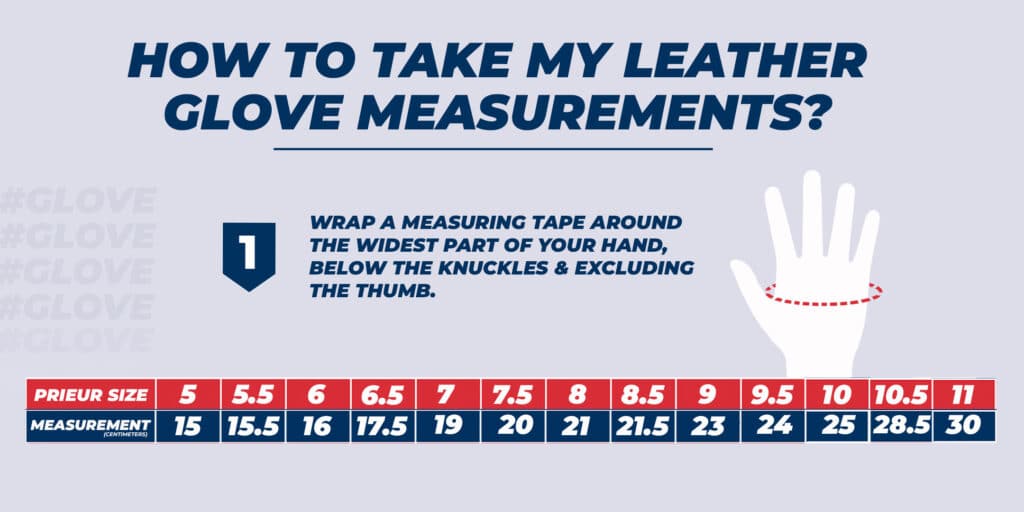
Sizing charts provide a useful baseline, but real-world fencing glove fit depends on hand shape as much as measurement. Variations in finger length, palm width, and wrist circumference can affect fit even within the same nominal size.
When selecting a glove:
Prioritize finger length and palm comfort
Confirm cuff coverage and wrist stability
Avoid compensating for one issue by accepting another
A glove that passes all seven checks will outperform one that fits “well enough” in only a few areas.
Fencing Glove Fit as a Cost and Value Decision
Replacing gloves prematurely due to poor fit is avoidable. Correct fencing glove fit extends usable life, preserves materials, and improves long-term value.
Proper fit:
Reduces replacement frequency
Preserves reinforced zones
Maintains consistent protection
Choosing the right size once is more efficient than adapting to an ill-fitting glove over time.
Final Thoughts: Fencing Glove Fit Is Foundational
A fencing glove is essential protective equipment, not a disposable accessory. Proper fencing glove fit ensures safety, comfort, and durability across months and seasons of use.
By applying these 7 smart checks, fencers can confidently select gloves that perform as designed and deliver long-term value.
Correct fencing glove fit is not optional. It is the foundation of safer, longer-lasting fencing gloves.