Complete Fencing Equipment List: Get Ready to Fence with Confidence
Whether you’re stepping onto the piste for the first time or upgrading your gear for competition, knowing exactly what belongs on your fencing equipment list is essential.
From masks and jackets to blades and cords, every piece of equipment plays a specific role in keeping you safe, comfortable, and performing at your best.
🗡️ The Essentials: What’s Required for All Fencers
Whether you fence foil, epee, or sabre, every athlete must have this core gear. These are the safety and performance foundations that make up your standard fencing equipment list.
1. Fencing Jacket
A fencing jacket provides your main layer of protection. It’s built with puncture-resistant material and designed to cover the torso, sides, and arms while allowing full range of motion.
Beginners: A 350N club jacket meets safety requirements for most local classes and tournaments.
Tip: The fit should be snug but not restrictive. Jackets that are too loose can snag; too tight, and they limit movement.
2. Fencing Pants (Knickers)
These protect the lower body from the waist to below the knees. All fencers are required to wear pants with at least 350N resistance, but higher-level events require 800N FIE-approved versions.
Pair your pants with long socks that overlap the hem to ensure full coverage.
3. Underarm Protector (Plastron)
This extra layer adds vital puncture protection beneath your jacket—especially for the sword arm and chest. Plastrons are mandatory for all competitions and must overlap the jacket by several centimeters.
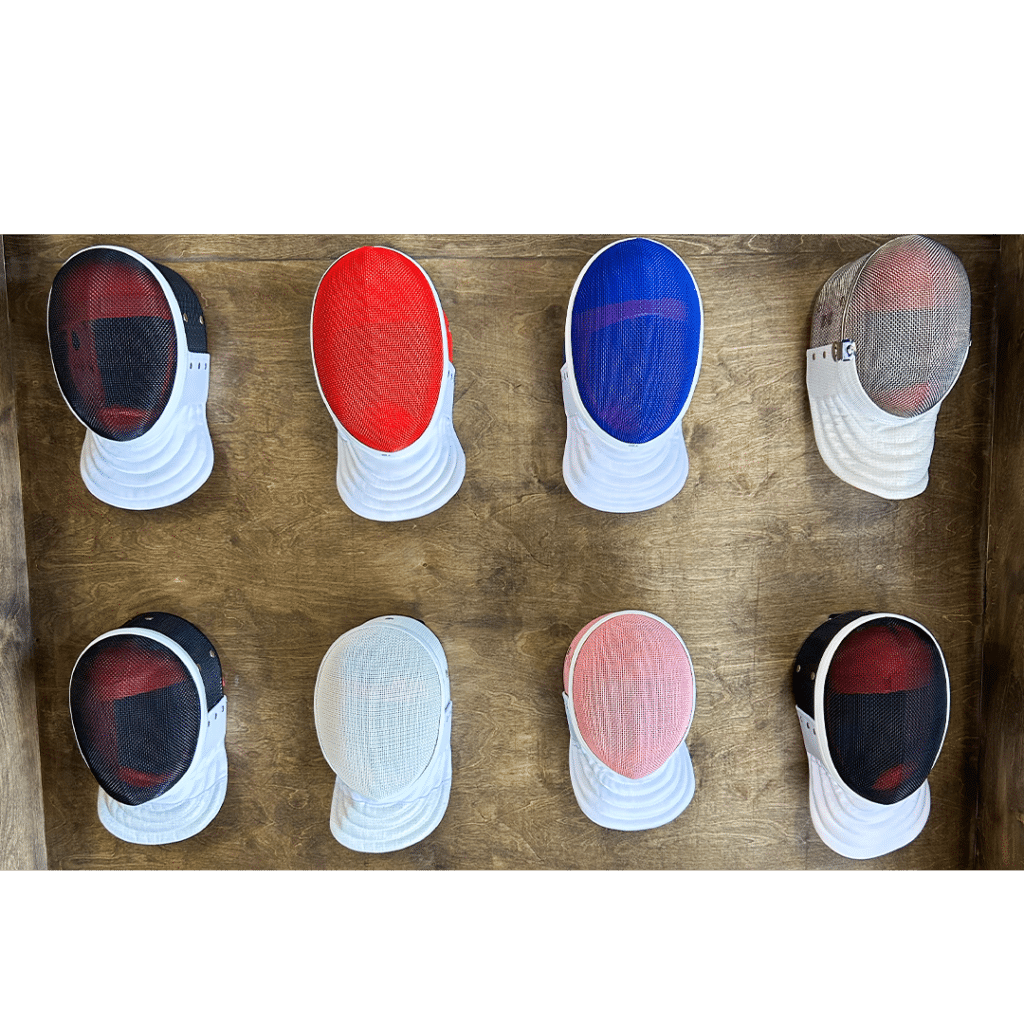
Your mask is your most important piece of protection. It must fit securely, with no movement during lunges or parries.
Each weapon has a slightly different style:
Foil: Conductive bib for valid target area.
Epee: Non-conductive mask (full body is valid target).
Sabre: Fully conductive covering for head and bib.
For advanced competitors, look for 1600N FIE masks—such as Prieur’s FIE-certified options—for ultimate safety and durability.
5. Glove
The fencing glove covers the weapon hand and wrist, protecting against hits and abrasion while improving grip. Foil and epee gloves have a non-conductive cuff; sabre gloves have a conductive one to register valid touches.
Keep a spare glove in your bag—torn seams or sweat buildup can lead to failed inspections mid-tournament.
6. Socks & Undershirts
Long white socks are required to overlap the fencing pants, leaving no exposed skin. Many fencers wear lightweight, moisture-wicking undershirts for comfort, temperature regulation, and hygiene—especially during long tournaments.
7. Chest Protector
Required for all women and optional for men, a chest protector adds an additional impact buffer under the jacket and plastron. Modern versions are shaped, ventilated, and made from impact-resistant plastic for comfort and protection.
⚙️ Weapon-Specific Gear
Once you have the basics, you’ll need the right setup for your weapon. Each discipline—foil, epee, or sabre—has its own fencing equipment list requirements.
Foil
Foil fencers target the torso only. This requires additional conductive gear to define valid hits.
Foil-specific items:
Foil weapon: Lightweight, flexible blade with a smaller guard.
Body cord: Connects weapon to scoring box via your jacket and reel.
Mask cord: Connects the conductive bib to the body cord.
Lame (metallic jacket): Defines the valid target area (torso and bib).
Optional backup gear: A spare weapon and cords are highly recommended, especially for competition.
Epee
In epee, the entire body is target, so no lame is needed—just precision and reach.
Epee-specific items:
Epee weapon: Heavier blade with a larger bell guard.
Body cord: Connects the weapon directly to the scoring box (no mask cord required).
Because epee bouts can go long, comfort and balance are key—many fencers prefer blades like the STM FIE Elite+ for stability and durability.
Sabre
Sabre fencers score with the edge of the blade, and the valid target area includes everything above the waist.
Sabre-specific items:
Sabre weapon: Stiffer blade designed for cutting actions.
Body cord: Same 3-prong connector as foil.
Mask cord: Connects to the conductive mask.
Lame (jacket): Covers torso and arms.
Conductive glove: Required for valid scoring on the hand.
🎒 Optional (But Highly Recommended) Accessories
Your fencing equipment list doesn’t end with just the required items. The right accessories can extend gear life, prevent delays, and make travel easier.
1. Fencing Bag
A must-have for organization and transport. Choose a wheeled fencing bag if you travel for competitions—Prieur’s bags are designed with durable zippers, structured weapon compartments, and vented pockets for clothing and shoes.
2. Tools & Spare Parts
Every fencer eventually becomes a part-time technician. Carry a small repair kit including:
Screwdriver or hex key
Spare screws, tips, and springs
Tesa tape (for securing foil blade tips)
Electrical tape or cloth tape
Small pliers
3. Extra Body Cords & Mask Cords
Cords wear out faster than most gear—keeping extras prevents last-minute equipment failures at tournaments.
4. Warm-Up Gear
A lightweight tracksuit or hoodie helps keep your muscles warm between bouts and protects your uniform when stretching or coaching.
5. Cleaning & Maintenance Supplies
Use a soft cloth or disinfecting spray to keep your mask and jacket fresh after each session. For blades, wipe off sweat or moisture after training to prevent corrosion.
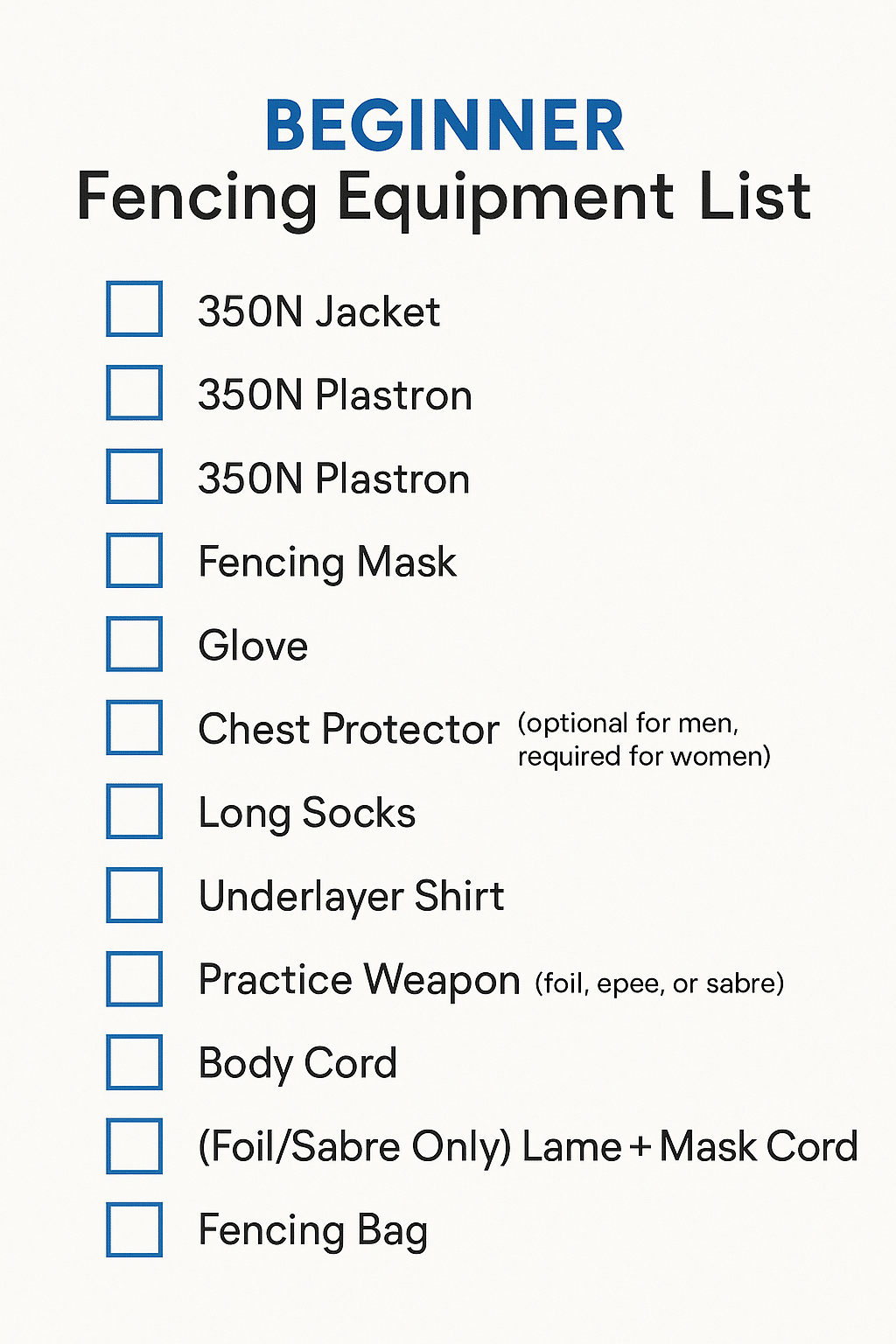
📋 Beginner Fencing Equipment Checklist
Here’s a simple checklist to get you fully equipped for your first classes or club practice.
Beginner Fencing Equipment List:
350N Jacket
350N Pants
350N Plastron
Fencing Mask
Glove
Chest Protector (optional for men, required for women)
Long Socks
Underlayer Shirt
Practice Weapon (foil, epee, or sabre)
Body Cord
(Foil/Sabre Only) Lame + Mask Cord
Fencing Bag
💡 Upgrading to Competition-Level Gear
Once you begin competing, upgrading to FIE-certified (800N/1600N) gear is a smart investment. Not only does it meet international safety standards, but it also offers superior comfort, lighter weight, and longer durability.
Recommended FIE Upgrades:
Prieur 800N FIE Jacket
Prieur Superlight 800N Jacket & Pants
FIE 800N Plastron
FIE 1600N Mask
Premium FIE weapon (BF or STM blades)
🔗 Where to Buy Quality Fencing Equipment
Your equipment is your armor—cutting corners can compromise safety and performance. At PrieurUSA.com, you’ll find all the essential gear in one place, including FIE-certified uniforms, masks, and weapons trusted by fencers worldwide.
A well-organized fencing equipment list helps you stay confident and competition-ready. From your first lesson to your first international tournament, having the right gear—properly fitted, maintained, and stored—makes all the difference.
Prieur USA offers everything you need to get started, from beginner kits to elite FIE uniforms. Equip yourself for success, step onto the piste with confidence, and let your fencing journey begin.