5 Essential Fencing Weapon Parts Explained: Build Your Perfect Sword
Whether you’re tuning gear for competition or assembling your first blade, understanding fencing weapon parts is essential. Each component — from the blade and tip to the guard, grip, and pommel — shapes how your weapon feels, performs, and lasts. In this guide, we break down the five key fencing weapon parts and show you how to choose and maintain them to build your perfect sword.
Quick TL;DR
Blade — the heart of your weapon: stiffness, taper, and tip type change handling.
Tip / Point — ensures safety and scoring consistency.
Guard (Bell Guard) — protects your hand and affects balance.
Grip / Handle — French or pistol; changes control and technique.
Pommel — fine-tunes balance for French grips and stabilizes the assembly.
1. Blade — feel starts here
The blade is one of the most critical fencing weapon parts, and it defines how your sword handles. It’s the long metal strip that carries force and feedback from parries, hits, and ripostes. Blades differ in material quality, flexibility (flex), taper profile, and attachment type (how the tip and grip connect).
Why it matters:
Flex/stiffness changes how forgiving a blade is. A more flexible blade can feel “springy” and forgiving on mistakes; a stiffer blade favors precise point control and quicker recovery.
Taper and weight distribution influence balance and point-of-contact feel. A blade with a forward balance gives sharper feedback; one balanced closer to the guard feels quicker for changes of line.
Compatibility — make sure the blade type (foil, épée, or sabre) and its mounting match the rest of your fencing weapon parts.
Pro tips:
If you’re transitioning from club training to competition, test blades near your usual stiffness before buying.
For épée, smoother blades reduce the chance of tip snapping. Always keep blades straight — even slight bends create tension that shortens lifespan.
Among all fencing weapon parts, the tip plays the biggest role in safety and scoring. It’s the part that touches your opponent and, on electric weapons, completes the scoring circuit. Different weapons use different tip designs (foil vs épée vs sabre), and tip maintenance is crucial for reliability and safety.
Key considerations:
Shock-absorbing vs. rigid tips: Tournament tips have springs or dampeners to meet safety specs and register hits consistently. Replace tips when springs get loose or if the point feels “mushy.”
Tip size and thread: Buy the correct tip size and threading for your blade. The tip must seat properly, with the contact screws secure for consistent scoring.
Insulation and wiring: In foils and épées, the tip houses the contact and insulation — damaged insulation causes false positives or failed hits.
Maintenance checklist:
Check tip springs and screws before every tournament.
Replace worn or damaged tips — it’s cheaper than losing a match to a faulty contact.
3. Guard / Bell Guard — protect the hand, tune the balance
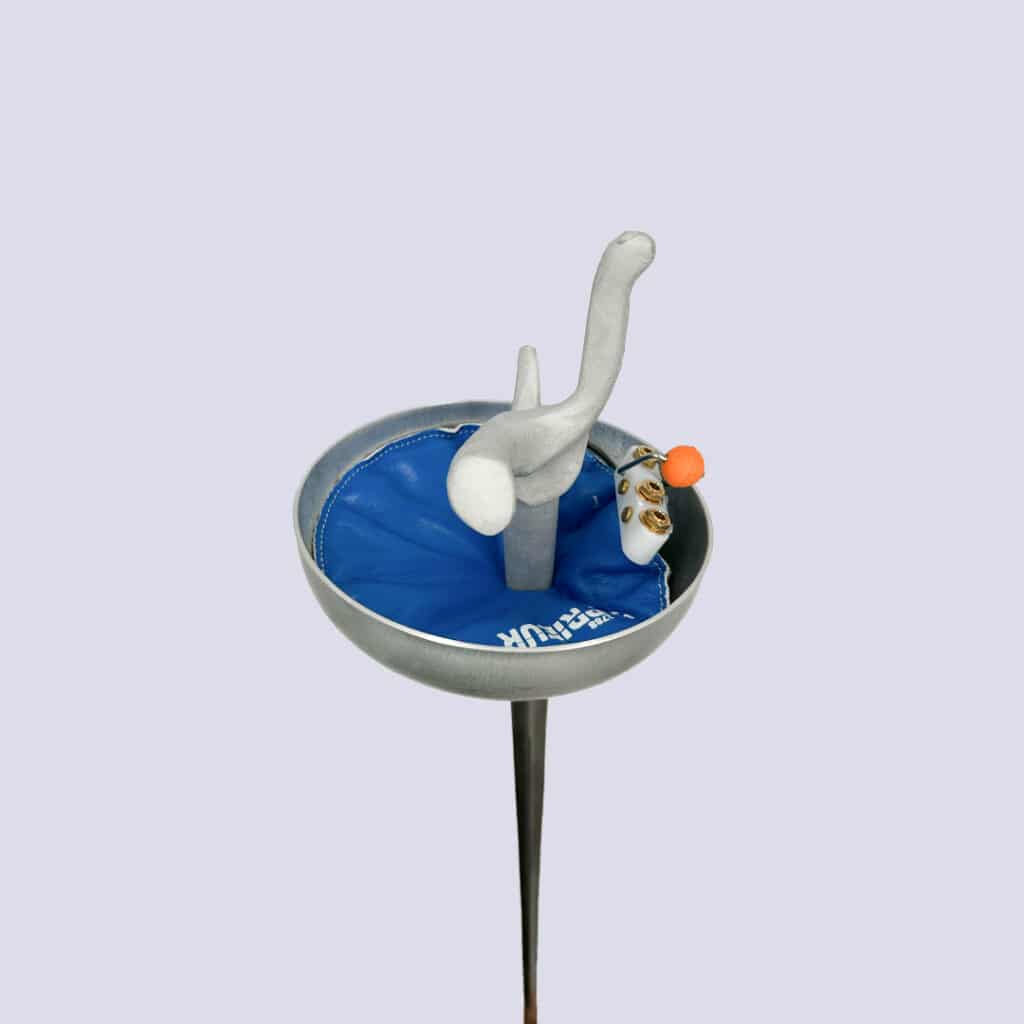
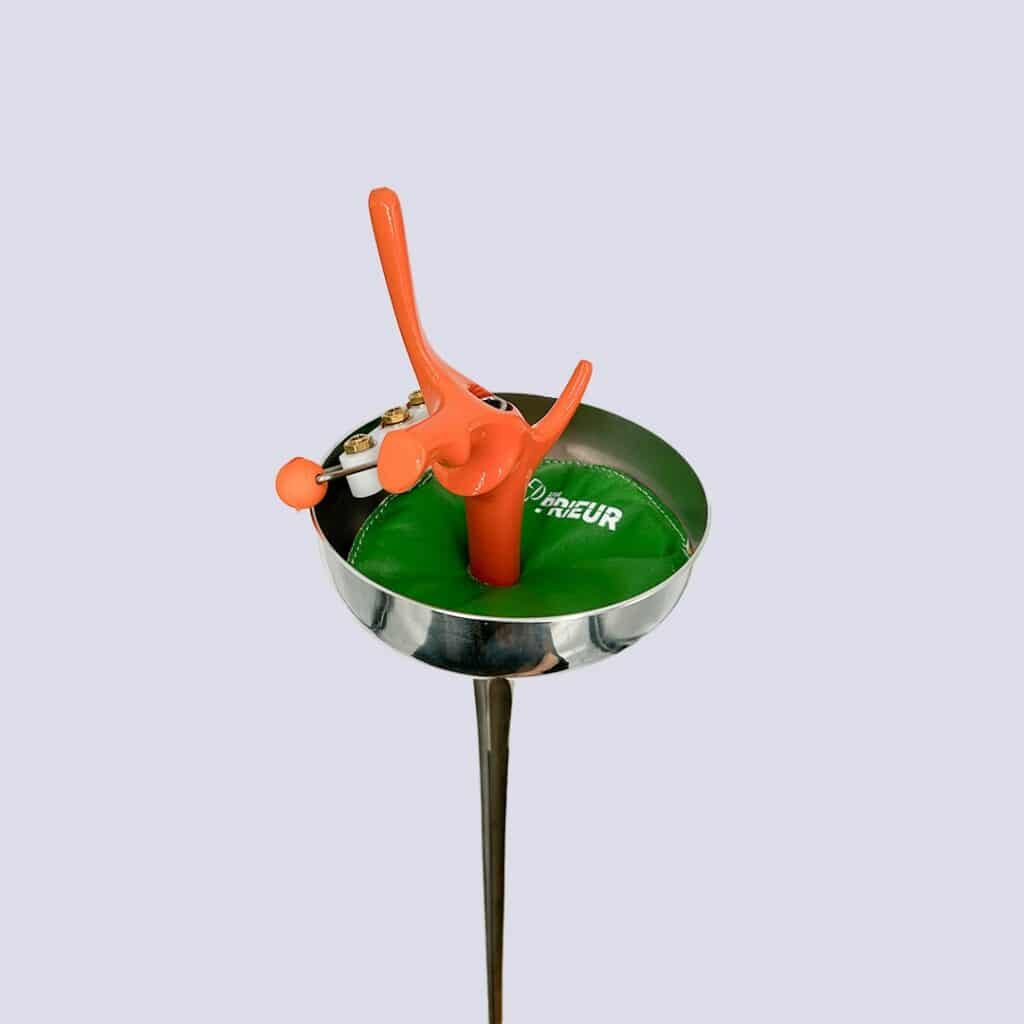
The guard is one of the most visible fencing weapon parts, serving as both protection and balance control. It deflects attacks away from your hand and affects how the weapon’s weight feels in motion.
What to think about:
Depth and rim shape: Deeper guards offer more protection but may add weight. Shallow guards give a faster, more agile feel.
Material and finish: Most guards are steel or aluminum. Cosmetic wear is normal, but dents and bends mean it’s time for a replacement.
Grip compatibility: Some grips sit closer to the guard, so check that you have comfortable spacing without gaps.
Tuning advice:
If your weapon feels tip-heavy, a heavier guard can shift balance closer to the hand.
A lighter guard speeds up tempo — great for foil and sabre fencers who prioritize fast reactions.
The grip is the part of your weapon that connects your hand to the blade — literally. It’s one of the most personal fencing weapon parts because it shapes comfort, control, and fencing style.
Common grip types:
French (straight) grip: Offers extended reach and wrist flexibility. Popular among épéeists who favor distance and point control.
Pistol / anatomical grip: Ergonomic and stable. Most competitive foilists and sabreurs prefer this for its consistent control and strong parries.
Taping and wraps: Thin grip tape lets you fine-tune thickness and comfort. Avoid electrical tape — it can slip and leave residue.
Pro guidance:
If you switch grip types, give yourself time to adapt. The muscle memory between French and pistol grip is different.
Replace grips when worn or loose — a secure grip is key for precise blade work.
5. Pommel — small weight, big impact on French grips
The pommel completes your set of fencing weapon parts, though it’s used exclusively on French grip weapons. It’s the weighted cap that threads onto the end of the tang, securing the grip and adjusting balance.
What the pommel does:
Secures the grip and guard: Keeps the weapon’s assembly tight and solid.
Adjusts balance: A heavier pommel brings the balance point closer to your wrist for better tip control.
Improves endurance: Proper balance reduces wrist strain and helps maintain consistency through long tournaments.
Finding your ideal balance:
Heavier pommels (70–110 g): Move balance toward the hand — ideal for precision épéeists.
Medium pommels (40–70 g): Balanced feel for all-around fencing.
Light pommels (20–40 g): Best for younger fencers or faster wrist work.
Materials and finishes:
Steel pommels: Durable and regulation-compliant.
Brass or tungsten: Heavier options for fine-tuned balance.
Aluminum: Lightweight for training or youth setups.
Maintenance tips:
Check tightness before each session — a loose pommel can twist mid-bout.
Putting it all together — building your perfect sword
Understanding your fencing weapon parts helps you assemble a weapon that feels like an extension of your arm. Each piece — blade, tip, guard, grip, and pommel — changes balance and control in its own way.
Example setups:
Club Trainer: Medium-flex blade, durable tip, shallow guard.
Competitive Control: Stiffer blade, tournament-grade tip, deep guard.
✅ Before each session: inspect tip, tighten screws, check blade straightness. ✅ Weekly: clean and polish the blade, inspect the guard and grip. ✅ Monthly: check tang threads, replace worn tape, adjust pommel tightness. ✅ Pre-tournament: full inspection — bring spares for all fencing weapon parts.
Before tournaments, perform a full inspection and bring spares for all fencing weapon parts. For reference, review the FIE Equipment Standards and Material Rules to ensure all your gear meets international requirements.
Final Thoughts
Building your perfect weapon isn’t just about putting pieces together — it’s about understanding how each fencing weapon part contributes to your performance. The right blade defines your attack, the guard protects your hand, the grip gives control, and the pommel fine-tunes your balance.
Master these five fencing weapon parts, and you’ll have a sword that feels truly yours — fast, balanced, and battle-ready.