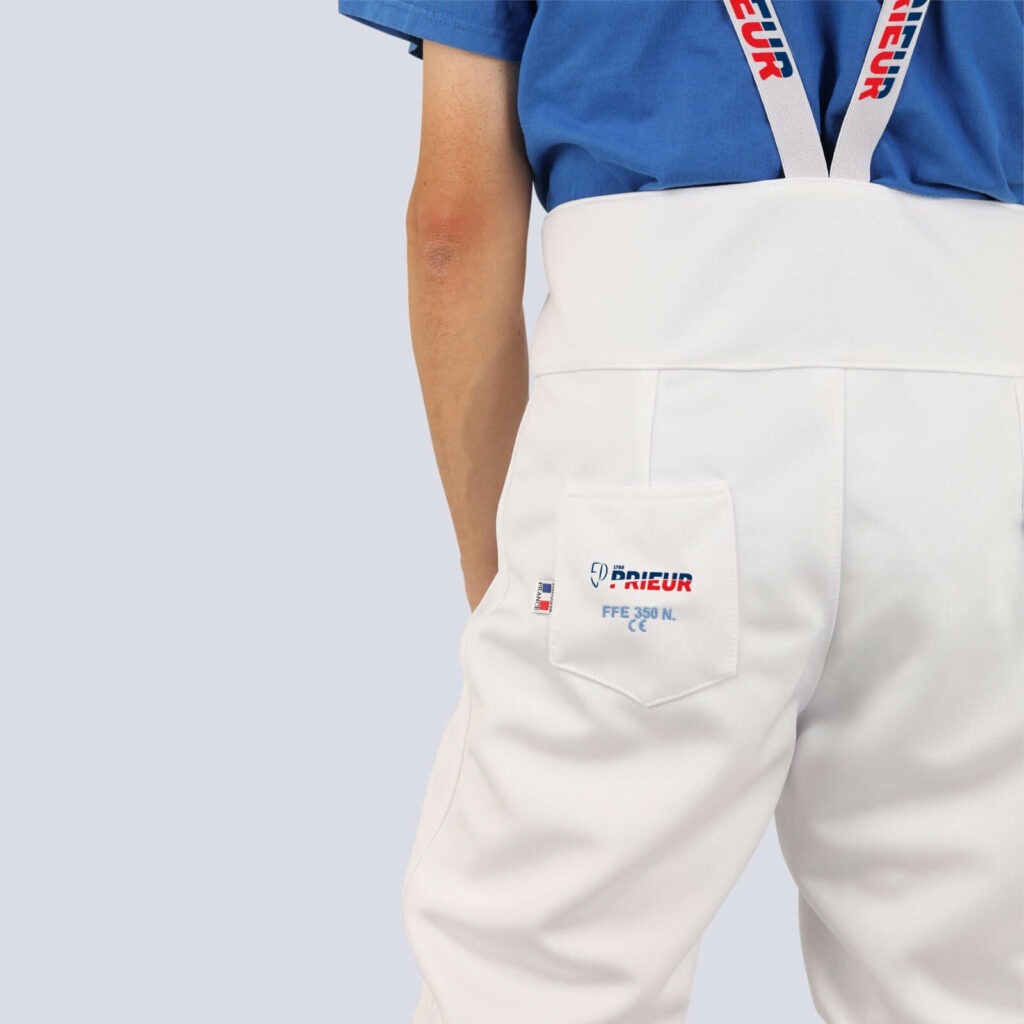
Understanding fencing uniform materials is essential for anyone investing in safe, reliable, and long-lasting fencing equipment. At Prieur USA, we design and select our uniforms with a clear purpose: to deliver dependable protection, consistent comfort, and proven durability across every level of fencing activity. Material selection influences how a uniform feels during extended wear, how well it resists abrasion and stress, and how reliably it performs over time.
In this guide, we explain fencing uniform materials in a practical, equipment-focused way—covering fabric construction, protective standards, comfort considerations, inspection needs, and long-term care. We reference only the fencing uniform categories we actually sell: 350N fencing uniforms, 800N regular fencing uniforms, and 800N Superlight fencing uniforms. Each serves a specific role, with material choices that directly affect protection and longevity.
What “Fencing Uniform Materials” Really Mean
When we discuss fencing uniform materials, we are referring to the engineered textile systems that make up jackets, knickers, and plastrons. These materials are evaluated not just for how they feel, but for how they perform under stress. Factors such as fiber composition, weave density, reinforcement zones, and finishing processes all contribute to the uniform’s overall performance.
Modern fencing uniforms are not simple cotton garments. They are purpose-built protective equipment designed to meet strict puncture-resistance standards while remaining wearable for long sessions. The balance between comfort and protection is achieved through advanced textile engineering—not shortcuts.
Protection Standards and Material Certification
All fencing uniforms are evaluated using Newton (N) ratings, which measure puncture resistance. These ratings directly reflect the strength and construction of the fabric used.
350N fencing uniforms are constructed from materials designed to meet the 350-Newton puncture resistance standard.
800N fencing uniforms, including 800N regular and 800N Superlight, use higher-density and higher-strength materials tested to withstand 800 Newtons of force.
These standards are recognized internationally and align with equipment safety expectations established by organizations such as International Fencing Federation. Material certification ensures that the fabrics used are not only strong at the time of manufacture, but consistent across production runs.
Our 350N fencing uniform materials are engineered for dependable baseline protection while maintaining structure and durability. These fabrics typically use tightly woven synthetic fibers designed to resist tearing and puncture within their certification limits.
From a material perspective, 350N fabrics prioritize:
Stable weave construction that maintains shape over time
Abrasion resistance for repeated use
Moderate flexibility without compromising structural integrity
While 350N uniforms are lighter in construction than 800N options, their materials are specifically chosen to meet the required safety threshold. The difference in protection between 350N and 800N is not subtle—material density and fiber strength are measurably different. For this reason, we never imply equivalence between these categories.
Material care plays a significant role in maintaining 350N performance. We explain how to monitor wear patterns and fabric fatigue in our fencing uniform inspection guide, which outlines how to identify thinning areas, seam stress, and surface abrasion before safety is affected.
800N Regular Fencing Uniform Materials: Maximum Protection Through Density
Our 800N regular fencing uniform uses materials engineered for maximum puncture resistance and long-term durability. These fabrics rely on higher-strength fibers and denser weave patterns, resulting in a more substantial feel and increased resistance to penetration.
Key material characteristics include:
High tensile fiber composition designed for impact resistance
Dense weave architecture that distributes force across the fabric
Reinforced stress zones in high-wear areas
The materials used in 800N uniforms are selected for longevity as much as protection. With proper maintenance and storage, these fabrics maintain their integrity across many seasons of use. We explore expected wear timelines and material aging in our fencing uniform lifespan and durability article, which explains how fibers behave over time and what factors accelerate degradation.
800N Superlight Fencing Uniform Materials: Advanced Engineering Without Compromise
Our 800N Superlight fencing uniform represents a refined approach to material engineering. While maintaining full 800N protection, Superlight fabrics are optimized for improved comfort and reduced bulk through advanced fiber selection and fabric construction techniques.
It is critical to be clear: Superlight does not mean reduced protection. The materials used in our Superlight uniforms meet the same 800N puncture resistance standards as our regular 800N uniforms. The difference lies in how those materials are engineered.
Superlight material advantages include:
High-efficiency fibers that deliver strength at lower weight
Optimized weave patterns that enhance flexibility and airflow
Reduced fabric mass without sacrificing certification
Comfort and Breathability: How Materials Affect Wear Experience
Comfort in fencing uniforms is directly linked to material behavior. Stiffer fabrics may feel more rigid initially, while engineered textiles with advanced fiber blends can offer greater flexibility and airflow.
Material features that influence comfort include:
Moisture management properties that help regulate heat
Fabric flexibility that allows natural movement without strain
Surface finish that reduces friction against underlayers
While comfort is subjective, material quality is not. High-grade fibers maintain their feel longer and resist breakdown from sweat, friction, and repeated washing. Lower-quality fabrics may soften quickly—but often at the cost of structural integrity.
Seam Construction and Reinforcement Zones
Material performance does not stop at the fabric itself. How materials are joined and reinforced plays a critical role in durability. Stress points such as underarms, shoulders, and crotch areas experience repeated load and motion.
Our fencing uniforms use:
Reinforced seam zones designed to complement fabric strength
Consistent stitching density that prevents localized stress
Material layering in high-impact areas where appropriate
Seams are often the first area to show fatigue, which is why we emphasize regular checks as outlined in our fencing uniform inspection guide. Material failure is rarely sudden—it develops over time and is visible with proper inspection.
Durability Over Time: How Fencing Uniform Materials Age
All materials age, but not all age equally. The lifespan of fencing uniform materials depends on fiber quality, weave integrity, care routines, and storage conditions.
Common factors affecting material longevity include:
Repeated mechanical stress
Exposure to moisture and improper drying
Improper folding or compression during storage
High-density materials, such as those used in our 800N uniforms, are inherently more resistant to long-term degradation. However, even the strongest fabrics benefit from correct storage practices. Avoiding prolonged compression and allowing fabrics to fully dry between uses helps preserve fiber strength.
Maintenance Practices That Preserve Material Integrity
Proper maintenance directly extends the life of fencing uniform materials. While cleaning methods vary by fabric type, the goal is always the same: preserve fiber strength and prevent premature breakdown.
Avoiding excessive heat that weakens synthetic fibers
Ensuring complete drying to prevent odor and fiber damage
Storing uniforms in breathable environments
We address these topics in depth across our uniform care resources, where we explain how daily handling, maintenance, and storage habits directly influence long-term material performance and uniform longevity.
Storage and Material Preservation
Storage conditions have a measurable impact on fencing uniform materials. Prolonged exposure to humidity, poor airflow, or excessive pressure can degrade fibers and compromise protective performance.
Best practices include:
Hanging or loosely folding uniforms to prevent creasing
Allowing airflow around stored garments
Avoiding sealed containers that trap moisture
Material preservation is not about special treatments—it is about consistency and awareness. Small changes in storage habits can significantly extend usable life.
Choosing the Right Material Category
Selecting between 350N, 800N regular, and 800N Superlight uniforms ultimately comes down to understanding how material construction aligns with your needs. Each category exists because material performance differs in measurable, meaningful ways.
To explore available options, we recommend reviewing our fencing uniform product pages, where material specifications, certifications, and construction details are clearly outlined. Across our equipment guides, we further explain how material design choices influence comfort, durability, protection, and long-term uniform performance.
Why Material Transparency Matters
At Prieur USA, we believe that understanding fencing uniform materials empowers better equipment decisions. Protection, comfort, and durability are not abstract concepts—they are the result of deliberate material engineering and responsible manufacturing.
By focusing on certified fabrics, proven construction methods, and clear maintenance guidance, we ensure our uniforms deliver reliable performance throughout their intended lifespan. Whether choosing a 350N fencing uniform or evaluating the refined construction of our 800N Superlight line, material quality remains the foundation of everything we offer.
For continued awareness, we encourage regularly evaluating how your uniform materials look, feel, and hold up over time, as long-term performance is shaped by daily use, handling, and storage—not just initial construction.