Fencing Gear Repair Made Safe: 7 Smart Rules for Repair vs Replacement Every Fencer Should Know
Understanding when fencing gear repair is acceptable—and when replacement is mandatory—is a critical part of responsible equipment ownership. While certain fencing components are designed to be serviced or maintained over time, others play such a direct role in protection and electrical safety that any meaningful damage requires immediate replacement.
At Prieur USA, we approach fencing gear repair through a safety-first lens. Equipment decisions should always prioritize protection, inspection outcomes, and long-term integrity—not short-term cost savings. This guide clearly explains which fencing gear can reasonably be repaired, which items must be replaced, and how inspection standards and wear patterns guide those decisions.
Rule 1: Repairs Are Only Acceptable When Core Safety Is Unaffected
The most important principle in fencing gear repair is simple: repairs are only appropriate when they do not compromise protective function, electrical reliability, or structural integrity. Some fencing components are intentionally modular and expected to experience wear without affecting safety, while others are certified as complete protective systems that must be replaced once compromised. This is why inspection standards—not appearance alone—determine whether fencing gear repair is acceptable, as outlined by the International Fencing Federation equipment control requirements.
Some fencing components are intentionally modular. They are expected to experience wear and be serviced over time without reducing safety. Others are certified as complete protective systems. Once those systems are compromised, repair cannot restore their original level of protection.
A common misconception is that “minor damage is always safe.” In reality, even small defects can undermine protective ratings, insulation, or consistency under repeated stress. This is why inspection standards—not appearance alone—determine whether fencing gear repair is acceptable.
We explain this distinction in more detail in our fencing equipment replacement guide, where we outline how safety certifications and inspection outcomes influence replacement timing.
Rule 2: Body Cords Are Repairable—Within Limits
Body cords are one of the few fencing items where fencing gear repair is often reasonable. Because body cords rely on internal wiring and external insulation rather than impact protection, certain failures can be addressed without compromising safety.
Minor electrical faults, intermittent connectivity, or worn internal wires may be repairable depending on severity and location. However, repeated failures, insulation breakdown, or extensive internal wear significantly increase the risk of unreliable electrical signaling and competition failure.
Body cords are not permanent equipment. Their lifespan is finite, even with proper care. We cover expected service life, wear indicators, and replacement timing in our fencing body cord lifespan article. When repairs become frequent or inconsistent, replacement is the safer and more reliable choice.
In these cases, we recommend replacing the body cord entirely using competition-ready options designed to meet electrical standards consistently over time.
Rule 3: Weapon Tips and Internal Components Are Often Serviceable
Weapon tips, springs, screws, and certain internal electrical components are designed with maintenance and replacement in mind. These parts experience repeated mechanical stress and are expected to be serviced during the normal life of a weapon.
Fencing gear repair is generally appropriate for:
Worn or inconsistent weapon tips
Springs that no longer return consistently
Screws or contact components that fail inspection
Because these parts do not provide protective coverage, replacing them restores function without affecting safety certification. That said, recurring failures often indicate broader wear within the weapon assembly.
When internal components require frequent attention, full component replacement—or in some cases replacing the complete weapon—may offer greater reliability and long-term durability. Our fencing gear longevity article explains how repeated service cycles signal end-of-life for certain assemblies.
Rule 4: Blades Should Be Replaced, Not Repaired
Blades are never candidates for fencing gear repair once compromised. Even minor cracks or metal fatigue fundamentally alter how a blade behaves under stress.
Blades are engineered to flex predictably and absorb force in controlled ways. Once that structure is altered, repairs cannot restore original performance or safety characteristics. Attempting to extend blade life after visible damage increases the risk of sudden failure, which poses a direct safety hazard.
If a blade shows signs of:
Cracking or splitting
Severe bending
Permanent deformation
It should be replaced immediately. Replacement ensures compliance with inspection standards and maintains predictable behavior during use. Safety-certified blades are designed to be replaced—not restored—when wear reaches critical thresholds.
Rule 5: Masks Must Be Replaced When Structural Integrity Is Compromised
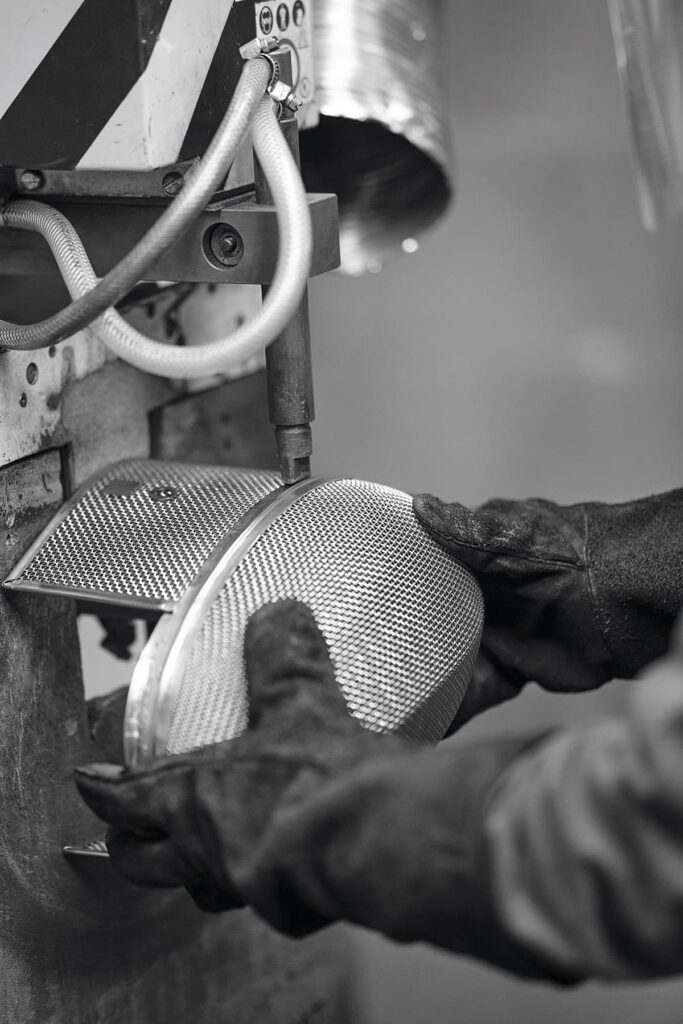
Fencing masks are among the most safety-critical pieces of equipment. They protect the head, face, and neck, and their certification depends on the integrity of the mesh, bib, and attachment systems.
While some mask components may be replaceable, structural damage to the mask itself cannot be safely repaired. Mesh deformation, cracked frames, compromised welds, or bib degradation directly affect impact resistance and penetration protection.
Our mask inspection guide explains how inspection standards identify failure points that require replacement rather than repair. Once a mask fails inspection due to structural or material breakdown, replacement is mandatory.
Attempting fencing gear repair on a compromised mask does not restore certification and introduces unacceptable risk. In these cases, replacing the mask with a fully compliant model is the only responsible option.
Rule 6: Uniforms Depend on Location and Severity of Damage
Uniforms—including jackets, pants, and plastrons—occupy a middle ground in fencing gear repair decisions. Minor cosmetic wear or surface abrasion does not automatically require replacement. However, damage affecting protective coverage, seam strength, or material integrity does.
Repair may be acceptable when:
Damage is superficial and outside critical strike zones
Protective layers remain intact
Seam strength is uncompromised
Replacement is required when:
Tears penetrate protective layers
Seams fail under tension
Material thinning affects certified resistance
Protective fencing uniforms are tested and certified as complete garments. Repairs cannot restore original resistance ratings if structural layers are compromised. Our fencing equipment replacement guide outlines how inspection outcomes determine when uniforms must be retired for safety reasons.
When replacement is necessary, we recommend certified jackets, pants, and plastrons designed to maintain consistent protection throughout their service life.
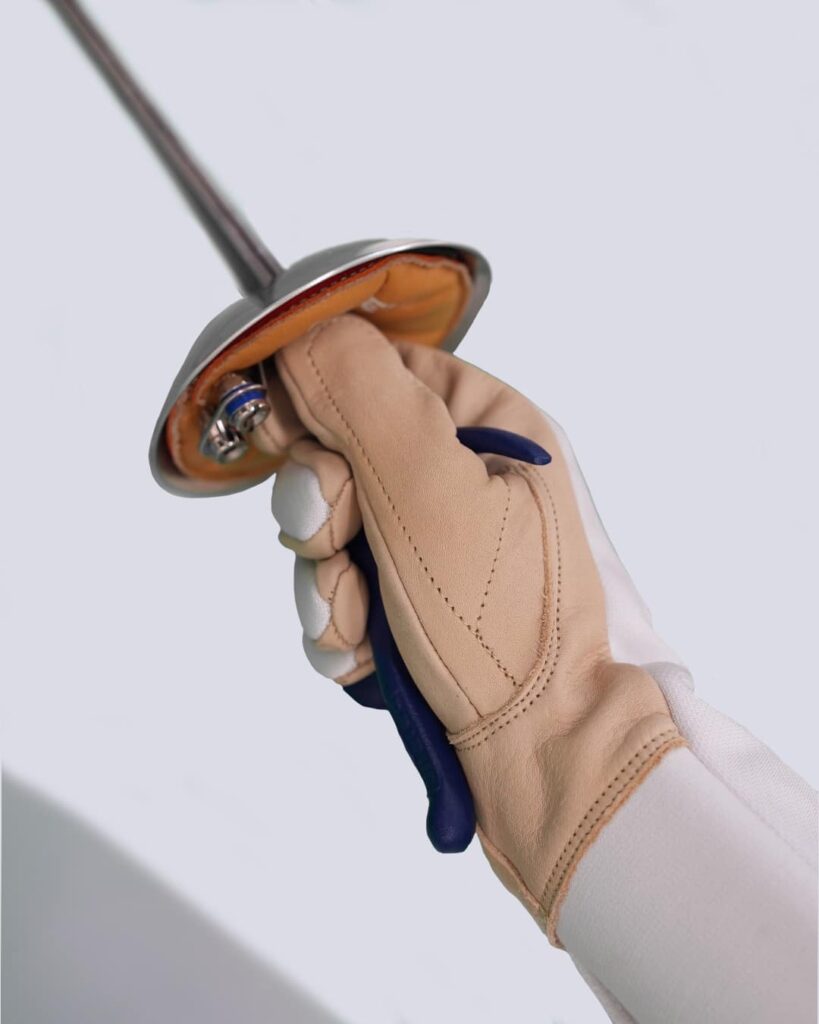
Rule 7: Gloves Should Be Replaced When Protection or Grip Is Affected
Gloves experience constant friction, flexing, and sweat exposure. While minor wear is expected, gloves play a direct role in hand protection, weapon control, and electrical consistency.
Fencing gear repair is rarely appropriate for gloves. Once padding compresses, seams fail, or material thins in high-contact areas, protective performance is reduced. Repairs cannot reliably restore grip integrity or puncture resistance.
Common misconceptions suggest that small tears or worn areas are “safe enough.” In reality, gloves often fail gradually, and continued use after visible wear increases the risk of hand injury or electrical inconsistency.
Replacing gloves at the appropriate time supports both safety and equipment longevity. Our gear longevity content explains how proactive replacement reduces cumulative wear-related risk.
Why Repairs Do Not Restore Original Protection
One of the most persistent myths surrounding fencing gear repair is the belief that repairs restore equipment to its original condition. For protective equipment, this is rarely true.
Certification standards apply to new, intact equipment tested as a complete system. Once that system is altered through damage or repair, its original protective characteristics cannot be guaranteed. Repairs may address symptoms, but they do not reverse material fatigue, stress history, or structural compromise.
This is why inspection standards focus on outcomes, not intentions. If equipment fails inspection, replacement is required regardless of repair attempts.
Safety-First Decisions Protect Fencers Long-Term
Choosing between fencing gear repair and replacement should never be about convenience or short-term savings. It should be guided by inspection results, wear patterns, and the role each piece of equipment plays in protection.
Repair is appropriate for modular, serviceable components where safety is unaffected. Replacement is mandatory for protective systems and structural elements where failure risk cannot be mitigated.
At Prieur USA, we advocate for clear, safety-driven decision making. Our guides on fencing gear longevity, body cord lifespan, mask inspection, and equipment replacement timing are designed to help fencers make informed choices that protect them season after season.
When safety is involved, replacement is not an inconvenience—it is a responsibility.