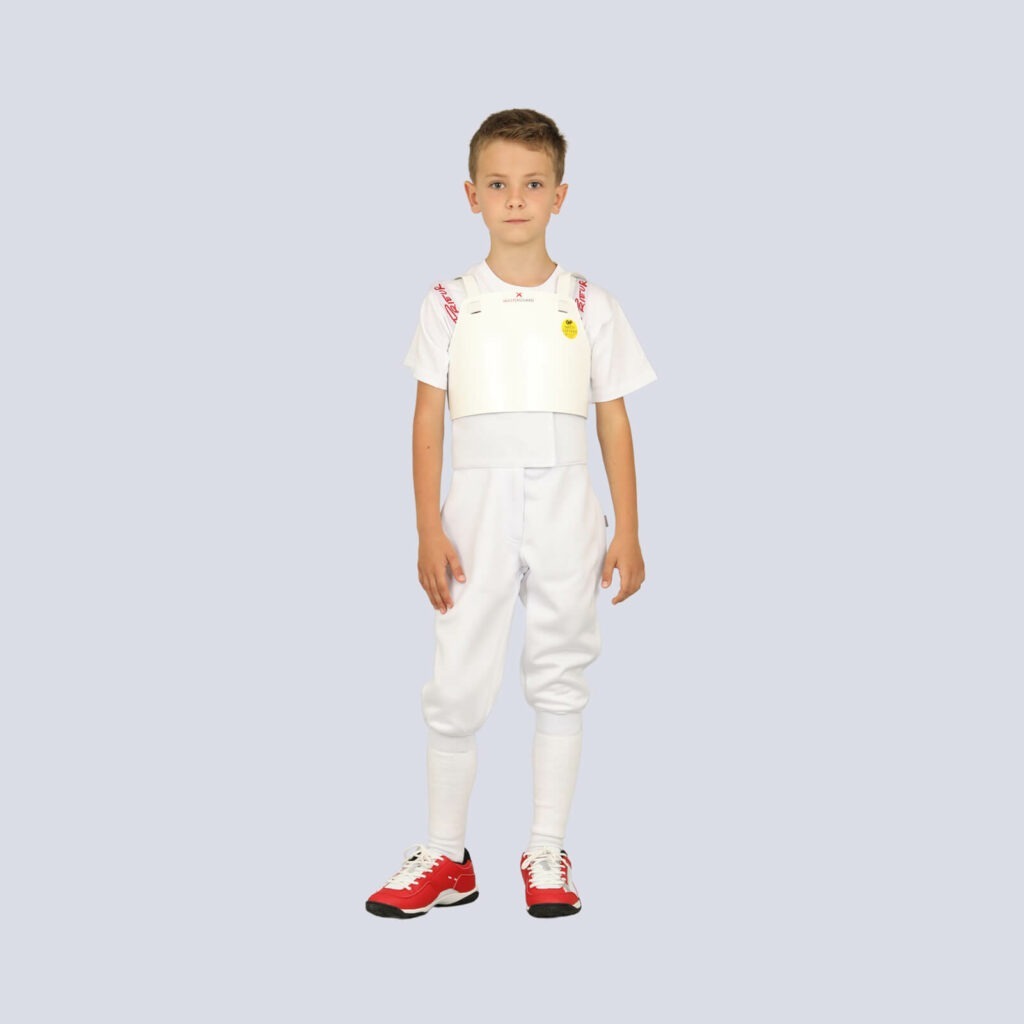
Fencing Chest Protector Guide: 7 Powerful Tips to Choose the Safest Fit for Men & Women
Chest protection has evolved into one of the most important elements of modern fencing equipment. Whether you’re a youth athlete learning fundamental distance, a competitive foil fencer managing whip-like flicks, or an adult fencer who simply prefers greater comfort during heavy training sessions, the right fencing chest protector dramatically improves safety and confidence.
Yet many fencers still use chest protectors that are the wrong shape, the wrong size, or incorrectly layered—leading to discomfort, shifting, or inconsistent jacket fit. A properly fitted chest protector is almost unnoticeable; a poorly fitted one is distracting in every action. Choosing the right fencing chest protector ensures both comfort and reliable protection during training and competition.
This expanded guide teaches you everything you need to know, including anatomical differences, fit principles, layering technique, and 7 powerful tips that help you choose the safest, most functional fencing chest protector for your needs.
Why Fencing Chest Protectors Are Essential
Every fencing action—whether it’s a foil flick, an épée thrust, or a sabre cut—involves high-speed blade contact and the potential for sharp impact. A fencing chest protector absorbs and disperses force in a way that reduces soreness across long tournament days and improves overall confidence. This protection works alongside broader fencing uniform safety requirements used in training and competition.
1. Impact Absorption
The protector spreads impact across a wider surface, reducing peak pressure and preventing deep bruises.
2. Confidence in Close Distance
Many fencers perform noticeably better when they aren’t worried about taking a painful touch in tight exchanges.
3. Uniform Stability
A fencing chest protector creates a flat, stable shape under the plastron and jacket, improving comfort and freedom of movement.
4. Consistent Scoring in Foil
When paired with the mandatory foam layer, chest protectors help ensure foil touches compress correctly and register cleanly.
5. Tournament Longevity
With dozens of bouts and hundreds of impacts, reliable protection reduces fatigue and discomfort.
Many athletes who were initially reluctant to wear chest protection eventually prefer it once they experience the increased comfort.
Men’s vs. Women’s Chest Protectors: Anatomical Differences That Matter
Chest protectors are not interchangeable across body types. Correct anatomical shaping is essential for comfort, freedom of movement, and proper uniform fit, similar to how overall fencing jacket fit affects mobility.
Men’s Chest Protector
Flatter, broader front contour Slight upper curvature for sternum and rib coverage Distributes force evenly without compression Helps keep jacket alignment smooth during lunges and rotation
This style is ideal for broader chest structures and flatter anatomical profiles.
Women’s Chest Protector
Sculpted dual-cup design Prevents pressure and compression in sensitive areas Supports natural anatomical shape Allows jackets to lie flatter without distortion
Choosing the correct anatomical model is the foundation of a fencing chest protector that moves naturally with the body.
The 7 Powerful Tips to Choose the Safest Fencing Chest Protector
1. Start With the Correct Anatomical Model
Before sizing or adjusting anything, select the anatomical model designed for your body. A well-matched fencing chest protector will:
Sit closer without gapping
Reduce pressure points
Support natural shoulder and scapular movement
Maintain clean jacket structure
When the base shape is correct, everything else—comfort, mobility, layering, and scoring performance—improves dramatically.
2. Choose the Right Size for Secure, Stable Protection
A fencing chest protector must make full, even contact across the torso. If it’s too small, it floats or pinches; if it’s too large, it restricts movement.
Signs of a Proper Fit
Rests comfortably below the collarbone
Ends above the lower ribs
Lies flat without lifting at the edges
Feels secure without overtight straps
Allows full torso rotation
Signs the Size Is Wrong
Protector rides up during extension
Jacket bulges outward
Pinching under the arms
Protector shifts during footwork
One side sits higher than the other
Sizing is the foundation of stability. Even a one-size change can make your fencing chest protector feel completely different. This mirrors other proper fencing gear sizing considerations.
3. Position the Protector Properly on the Torso
Even the right size can feel uncomfortable if placed incorrectly. Proper placement ensures predictable impact absorption and unrestricted movement.
Ideal Position
Centered over the sternum
Top edge just below the collarbone
Bottom edge above the ribcage
Level across the torso
With a properly positioned fencing chest protector, movements feel smooth and natural.
Fine-Tuning Tips
Raise slightly if you feel pressure during deep lunges
Lower if it approaches the throat during extension
Adjust strap lengths evenly
These small adjustments often eliminate discomfort completely.
4. Add the Foam Layer When Needed (Mandatory for Foil)
Foil fencers are required to wear a foam layer over the fencing chest protector. This layer:
Creates correct softness for hit compression
Prevents blade bounce
Ensures reliable scoring
Reduces vibration and sting
Even in épée and sabre, many athletes choose foam for comfort during heavy training sessions.
Even when optional, chest protectors are valuable for:
Youth beginners
Fencers who bruise easily
Foil fencers at all levels
Athletes returning from injury
Anyone doing high-impact drills
Competitors preparing for long events
A well-fitted fencing chest protector allows athletes to train harder, stay safer, and perform with greater confidence.
Final Thoughts: Choose Protection That Supports Your Fencing Goals
A properly fitted fencing chest protector should feel secure, balanced, and almost unnoticeable. With the right anatomical model, correct size, proper placement, and the right layering order, you gain protection without sacrificing mobility.
Use these 7 powerful tips to build a chest protector setup that keeps you safe, supported, and ready for your best performance.