Beginner Fencing Tool Kit: 9 Essential Items Every Fencer Must Carry
Fencing is a sport built on precision, speed, timing—and equipment that must function flawlessly every time you step on the strip. Whether you’re a brand-new athlete or gearing up for your first local tournament, one of the most valuable investments you can make is a well-prepared beginner fencing tool kit. This isn’t a luxury or something you only need “once you’re competitive.” It’s an essential part of being a prepared, confident, and independent fencer.
Every weapon is a combination of small screws, delicate springs, electrical connections, and moving parts. Even a tiny issue—a loose screw, a bit of oxidation on a prong, a weak spring—can stop touches from registering. A match can be delayed. A referee can reject your weapon. A practice session can be derailed.
Your solution? A complete fencing tool kit that ensures you’re ready for any equipment issue, from tip failures to cord issues to pre-bout inspections.
This guide breaks down the nine essential items every fencer should carry, explains why they matter, and gives you expert-level insight into how to keep your weapon performing at its best.
Why a Beginner Fencing Tool Kit Matters
Unlike many sports, fencing requires athletes to maintain their own weapons. Coaches can guide you, armorers can assist you—but at the end of the day, you are responsible for ensuring that your gear is safe, legal, and fully functional.
A properly stocked beginner fencing tool kit allows you to:
• Fix small issues instantly
Loose screws, faulty prongs, and worn springs are common. With the right tools, these are 30-second fixes.
• Pass equipment checks at tournaments
Referees will test your weapon—weight, shim, contact, continuity. If it fails, you need the tools to fix it on the spot.
• Reduce stress and avoid delays
Equipment failures at tournaments create panic. Having a complete fencing tool kit gives you control and confidence.
• Extend the lifespan of your gear
Regular maintenance saves money and keeps your weapon feeling consistent.
• Build fencing independence
The sooner beginners learn to care for their gear, the faster they progress.
A great fencing tool kit is not about being “handy”—it’s about being prepared.
THE 9 ESSENTIAL ITEMS
Below is the full, long-form breakdown of each item—what it does, why it’s essential, how to use it, and how it helps you avoid common equipment issues.
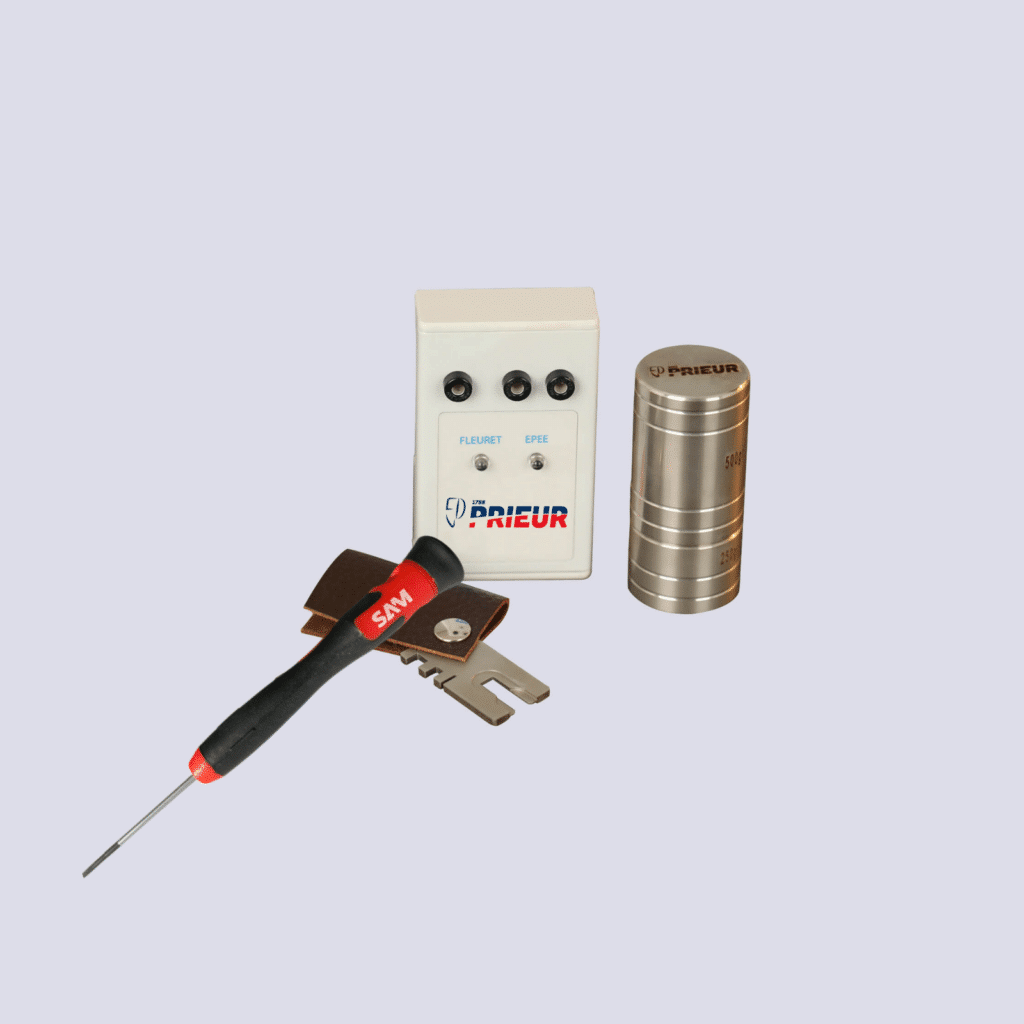
1. Small Screwdriver (Flathead & Phillips)
A must-have tool for nearly every repair.
The screwdriver is the most frequently used tool in any beginner fencing tool kit. Nearly every foil and epee issue involves a screw—either in the tip, the socket, or the body cord.
Why It’s Essential
Tightens foil/epee tip screws
Secures body cord screws
Fixes screws that work loose during warm-ups
A single loose screw can cause the entire weapon to stop scoring.
Beginner Misconceptions
Many beginners assume a non-functioning weapon is “broken,” when the issue is simply:
A loose tip screw
A missing screw
A screw that no longer reaches the spring
A screw that’s stripped inside the barrel
Best Practices
Use an electronics-style screwdriver (small, precise).
Keep both flathead and Phillips heads in your fencing tool kit.
Check tip screws every week during heavy training season.
The screwdriver is your #1 ally in preventing failed touches.
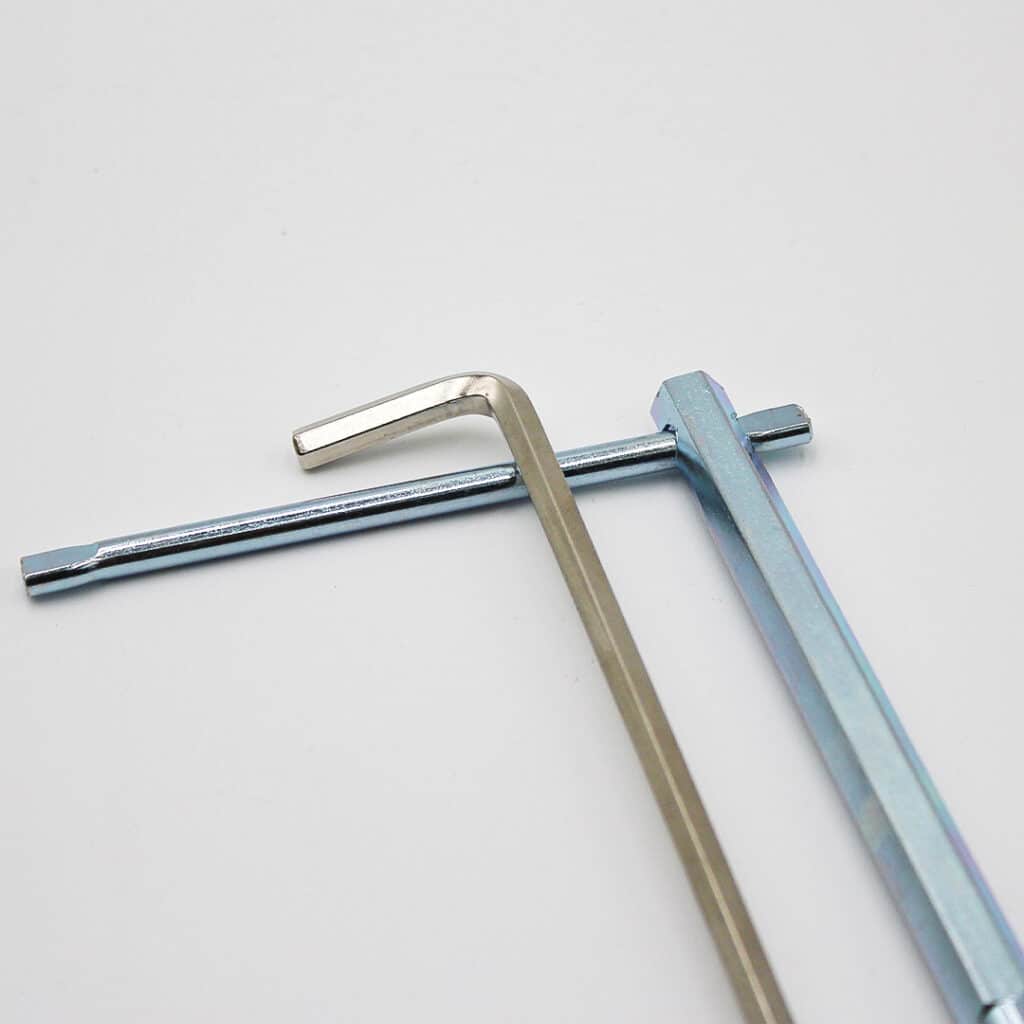
2. Allen Key / Hex Key
Critical for pistol grip fencers.
Pistol grips rely on a single hex screw to stay tight. If the screw loosens, the grip can rotate or wobble, causing pain, loss of control, or event disqualification.
Why It Belongs in Your Fencing Tool Kit
Tightens the main grip screw
Prevents wobble during parries and lunges
Lets you adjust or replace handles
Ensures consistent weapon feel
Beginner Mistakes
Only tightening when the grip feels extremely loose
Using the wrong key size (which strips the screw)
Forgetting the tool at tournaments
Expert Tip
Buy a hex key set so you always have every size you need.
3. Weapon Test Box
The fastest way to diagnose scoring issues.
Every fencer should carry a weapon test box in their fencing tool kit. It saves time, eliminates guesswork, and teaches beginners how their weapon’s electrical system works.
What It Tests
Body cord continuity
Tip depression
Tip release
Broken wires
Faulty sockets
Misaligned springs
Dead spots inside the barrel
Why Beginners Need One
Because “My weapon doesn’t work” isn’t a diagnosis. A test box tells you why it doesn’t work—and what to fix.
How It Saves Time at Tournaments
Instead of waiting in armory lines, you can:
Test the weapon yourself
Identify the issue
Fix it with your fencing tool kit
Get back to warm-ups or strip calls
A test box is like having a mini armory in your bag.
Passing the referee’s weight test is mandatory for foil and epee weapons. If your tip doesn’t depress under the required weight, it will fail inspection.
Official Weights
Foil: 500g
Epee: 750g
Why You Need Your Own Weight
Springs weaken over time
Screws crush springs if overtightened
Barrels bend slightly
Tips gather dust and sweat
Testing at home and before practice lets you catch issues early.
Common Failures
Tip depresses too easily → spring is old
Tip fails entirely → barrel bent or dirty
A fencing tool kit without a weight is not competition-ready.
Only epee has the shim test, and it’s one of the most commonly failed weapon checks.
What the Shim Test Measures
How far the tip can travel before going off
Whether the spring’s spacing is legal
Why It Belongs in Your Beginner Fencing Tool Kit
Weight test alone is not enough
Helps detect worn contact springs before competition
Ensures your epee won’t be rejected by referees
Improves scoring consistency
Pro Tip
After any tip repair, run:
Weight test
Shim test
Continuity test (with a test box)
This three-step routine eliminates 90% of epee issues.
6. Extra Body Cord (Foil/Sabre or Epee)
The most common failure point in fencing.
Every fencer experiences this: you plug in your cord, test the line, and nothing happens. Body cords fail constantly due to motion, sweat, bending, and impact.
Why You Must Carry a Spare
Prongs get bent
Wires break internally
Connectors loosen
Sweat corrodes metal
Jacket sleeves pinch the cable
Tournament stress accelerates wear
A spare in your fencing tool kit prevents panic.
Maintenance Tips
Clean prongs weekly
Straighten bent prongs gently
Coil the cord loosely
Don’t wrap around your elbow—this breaks internal wiring
Your fencing tool kit should always include one spare cord per weapon.
A complete beginner fencing tool kit is essential for any fencer who wants reliability and confidence. With these nine tools—and the Prieur Tool Bag to store them—you’re equipped for every practice, lesson, and tournament moment.