7 Key Electrical Components in Foil and Epee Explained: Master Your Scoring System
Modern fencing relies on precision — not just from the athlete, but from the weapon itself.
The introduction of electrical components in foil and epee transformed fencing from subjective judgments into an exact science. Every light that flashes on the scoring box comes from a perfectly timed flow of electricity moving through your weapon, body cord, and scoring system.
For fencers, understanding how these seven components work isn’t optional — it’s part of competitive preparation. Knowing your weapon’s electrical system helps you:
Diagnose problems mid-tournament.
Avoid unnecessary equipment failures.
Maintain your gear like a professional.
Let’s break down the seven key electrical components in foil and epee and learn how each one contributes to the scoring system.
1️⃣ Tip Assembly – Where Every Touch Begins
The tip assembly is the first and most sensitive component in your electrical circuit. It converts physical pressure into an electrical signal that determines whether a touch is valid.
Foil: The tip is insulated so it only closes the circuit when pressed on the metallic lamé. Off-target hits (arms, legs, mask) produce a white light.
Épée: The tip is conductive and registers hits anywhere on the opponent’s body or weapon.
Inside every tip:
Barrel: Holds the mechanism in place.
Spring: Controls tip pressure (500 g for foil, 750 g for épée).
Tip: Moves when pressed to close the circuit.
Even microscopic debris inside the barrel can cause false or failed lights. A quick clean with a cotton swab and alcohol can fix what seems like a major problem.
🧠 Pro Insight: Most tip failures occur during transport. Keep your weapon tips protected in a padded case and carry spare screws in your Prieur Fencing Toolbox.
2️⃣ Blade Wires and Insulation – The Hidden Circuit
Running along the groove of your blade are delicate insulated wires — the invisible veins of your electrical system.
Foil: Uses one wire inside the blade. The blade itself acts as the return path (C-line), while the A-line that connects to the lamé splits off at the socket.
Épée: Uses two wires inside the blade, connecting directly to the tip. When the button presses in, these two wires touch and complete the circuit.
Because they flex with every action, they’re prone to breaking near the socket or tip solder points. A common sign of a broken blade wire is a weapon that tests correctly one moment, then “goes dead” mid-bout.
🧰 Maintenance Tip: Test your weapon by flexing the blade while connected to a scoring box. If the light flickers or dies, your wire is likely fractured and needs to be rewired.
3️⃣ Socket – The Connection Hub
At the base of your handle sits the socket, the bridge between your weapon and your body cord. It’s one of the most frequently stressed electrical components in foil and epee, since it’s plugged and unplugged constantly.
Common issues include:
Bent or oxidized pins interrupting the circuit.
Loose screws causing flickering lights.
Corrosion from sweat, moisture, or travel.
🪛 Fix Tip: Clean sockets monthly with a small brush or contact cleaner. When tightening screws, secure firmly but avoid over-tightening — this can strip threads or crack insulation.
Pro Insight: Sockets are weapon-specific — a foil socket won’t fit an epee handle.
4️⃣ Body Cord – The Weapon’s Lifeline
The body cord connects your weapon to the scoring reel, making it one of the most recognizable electrical components in foil and epee.
Foil Body Cord – 2-Prong Plug
Though the plug has two prongs, the foil circuit uses three lines (A, B, and C):
A Line: runs to the lamé (valid target).
B Line: runs to the blade/tip.
C Line: shared ground.
Épée Body Cord – 3-Prong Plug
Épée cords use three separate contacts:
Two wires connect to the tip (B and C).
The third connects to the grounded weapon guard.
💡 Testing Tip: Before every tournament, plug your body cord into a test box and wiggle each end gently. If lights flicker or cut out, replace it. Body cords often fail internally where they bend at the plug.
🧰 Storage Tip: Wrap cords in loose figure-eights rather than tight coils to reduce internal wire fatigue.
5️⃣ Lamé (Foil Only) – The Scoring Surface
In foil, the lamé is the final link that defines a valid hit. It’s a metallic jacket that connects to the A-line of your circuit, determining whether a touch is valid (colored light) or off-target (white).
Without a properly functioning lamé, even perfect hits won’t register correctly.
Care & Maintenance:
Wipe with a dry cloth after each session to remove sweat and salt.
Wash gently with cold water every few months to prevent oxidation.
Clean your clip connection weekly with alcohol or electrical cleaner.
🧠 Pro Insight: Never fold or crumple your lamé — it can crack the conductive coating and create “dead spots.” Roll it gently or store it flat in your fencing bag.
6️⃣ Reel – The Moving Conductor
The reel connects your body cord to the scoring box through a retractable wire spool. It lets you move freely while maintaining constant electrical contact.
Inside, multiple wires wind and unwind on a spring-loaded drum. If these wires stretch unevenly or fray, signals can fail intermittently.
Common issues:
Internal tension spring broken.
Dirty or oxidized reel contacts.
Damaged wire insulation.
💡 Pro Tip: Reels need calibration and maintenance just like weapons. Clubs should inspect them every few months, especially before large competitions.
7️⃣ Scoring Box – The Brain of the System
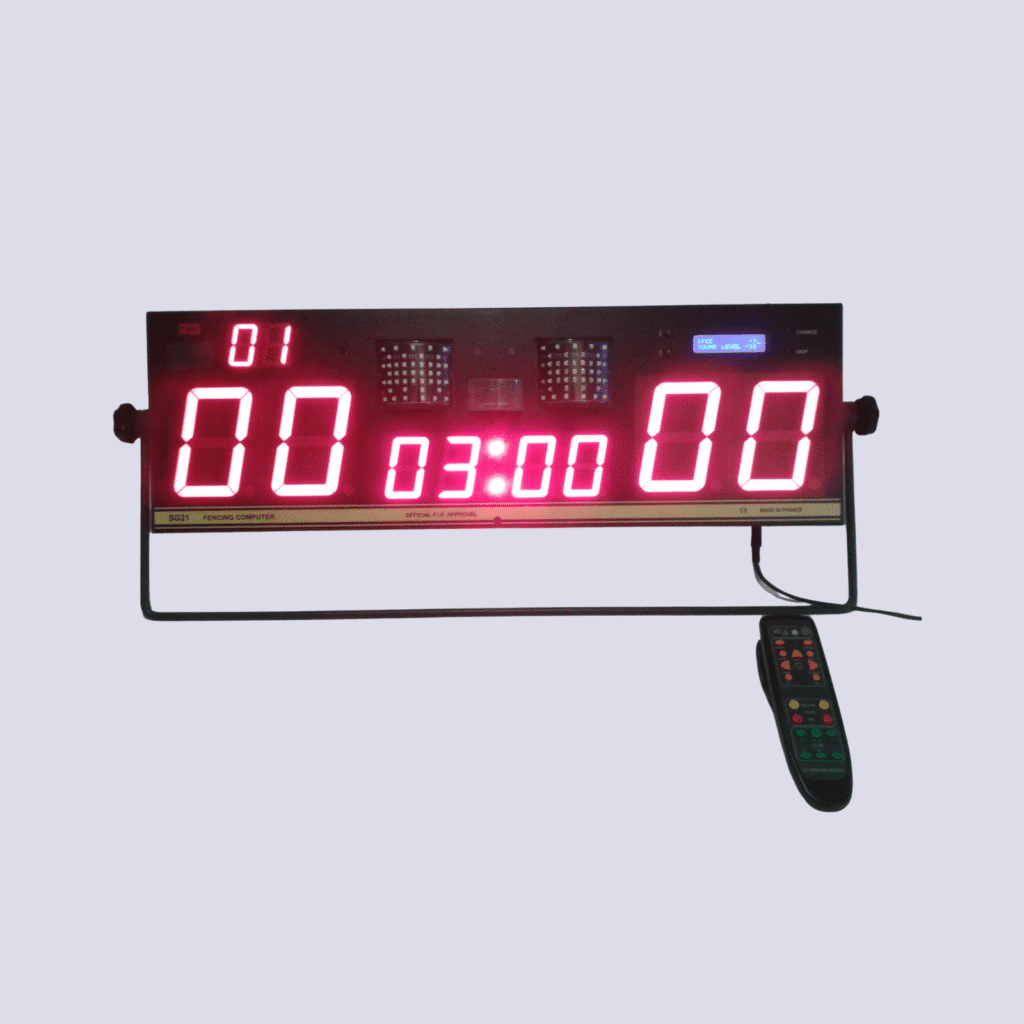
Finally, the scoring box interprets all signals coming from the weapon, cords, and reel. It’s the most complex of all electrical components in foil and epee, converting raw electrical activity into colored lights.
How it works:
The box continuously sends a low current through the circuit.
When a circuit closes (tip press), it detects a voltage change.
Logic processors decide which side scored and display the light.
Foil: differentiates valid vs. off-target using lamé contact.
Épée: registers valid hits anywhere, and handles double touches if both occur within 40 ms.
The scoring box is calibrated to FIE timing standards — see 🌐 FIE Technical Rules for precise timing specs.
⚙️ Maintenance and Testing Routine
Consistent maintenance keeps your electrical components tournament-ready and prevents frustrating malfunctions.
Weekly:
Test each weapon using a club test box.
Check all cords for continuity and bent prongs.
Wipe lamé and socket contact points clean.
Monthly:
Inspect weapon wires and sockets for corrosion.
Lightly oil tip springs to prevent oxidation.
Use your Prieur Fencing Toolbox to tighten and clean key components.
Before Events:
Pack spares: at least two working weapons and two cords.
Confirm all lights register correctly at your home club setup.
Bring contact cleaner, a screwdriver, and spare screws.
These steps ensure your electrical components in foil and epee perform consistently under pressure.
💡 Pro Tips for Competitive Fencers
Label cords with colored tape to avoid confusion.
Keep spare tips, screws, and springs in your toolbox.
Never store weapons wet — moisture can corrode sockets and wires.
Test every connection point (tip, socket, cord) before competition day.
🏁 Conclusion – Master Your Scoring System
Reliable performance begins with reliable equipment. When you understand how these seven electrical components in foil and epee work together, you’ll never be caught off guard by a malfunction again.
From the tip assembly to the scoring box, each part plays a role in your success. Test regularly, maintain carefully, and fence confidently.
Master your equipment — and let every touch light up exactly when it should.